
Long-Term Results of Cladribine Plus Immediate Rituximab
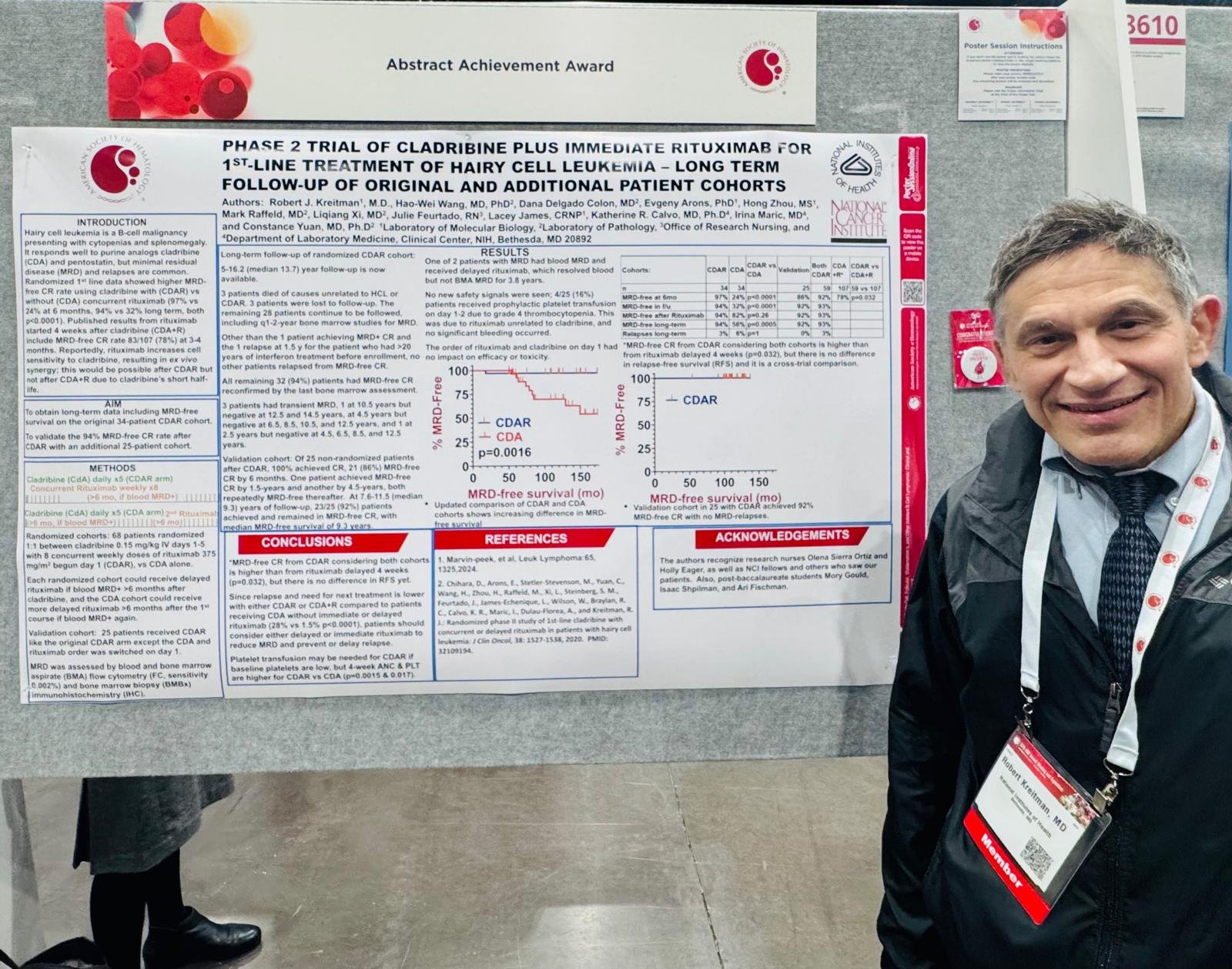
Dr. Robert Kreitman at the ASH 2025 meeting
Each year, the global hematology community gathers at the American Society of Hematology (ASH) Annual Meeting to share the latest advances in blood cancer research. We are launching the ASH 2025: HCL Takeaways blog series to present insights from the 2025 meeting relevant to people living with HCL.
Our first post features research about Long-Term Results of Cladribine Plus Immediate Rituximab presented by Dr. Robert Kreitman from the NIH.
Why this Study Matters
Cladribine has long been a primary first-line treatment for Hairy Cell Leukemia (HCL), offering high response rates. However, minimal residual disease (MRD) can persist and may eventually cause relapse.
Summary of the Study
This study asked an important question: Can starting rituximab at the same time as cladribine lead to deeper, longer-lasting remissions—and do those benefits hold up many years later?
This NIH phase 2 study followed 59 patients with newly diagnosed, untreated classic HCL who received first-line therapy with:
Cladribine, given intravenously over 5 days
Rituximab, given weekly for 8 weeks, starting on day one of cladribine
Patients were monitored with blood tests and bone marrow exams using sensitive methods to detect MRD. Follow-up was frequent initially and continued long term, with some patients observed for up to 15 years. This extended follow-up enabled assessment of both response and remission durability.
Key Takeaways
1. Very high and durable remission rates
All patients achieved a complete remission
More than 90% achieved MRD-negative remission
The vast majority remained MRD-negative for many years, with a median follow-up of over a decade
2. Relapses were rare
Only one relapse occurred after achieving MRD-negative remission among all patients, demonstrating the durability of these responses.
3. MRD sometimes appeared—and disappeared
A few patients experienced temporary MRD years after treatment, which later resolved without disease progression. This suggests the immune system may continue to help control HCL long after treatment concludes.
4. Safety remained reassuring over time
No new long-term safety concerns were identified. Some patients experienced short-term low platelet counts early in treatment, but no serious bleeding occurred, and overall tolerability was favorable.
What this Means for People Living with HCL
This long-term study provides strong evidence that cladribine combined with immediate rituximab is a highly effective first-line treatment for classic HCL.
For many patients, this approach offers:
Deep remissions
Very long treatment-free intervals
Excellent long-term disease control
Importantly, these results are supported by years of follow-up, which is especially significant for a rare, chronic leukemia such as HCL.
Looking Ahead
Researchers continue to study how MRD status affects long-term outcomes, including time to next treatment. These insights will help refine treatment decisions and further personalize care.
This post is the first in our ASH 2025: HCL Takeaways series. We will continue to share patient-centered summaries of new research, as understanding the science helps patients make informed, confident decisions about their care.