
Long-term outcomes of hcl patients treated with first-line cladribine in British Columbia
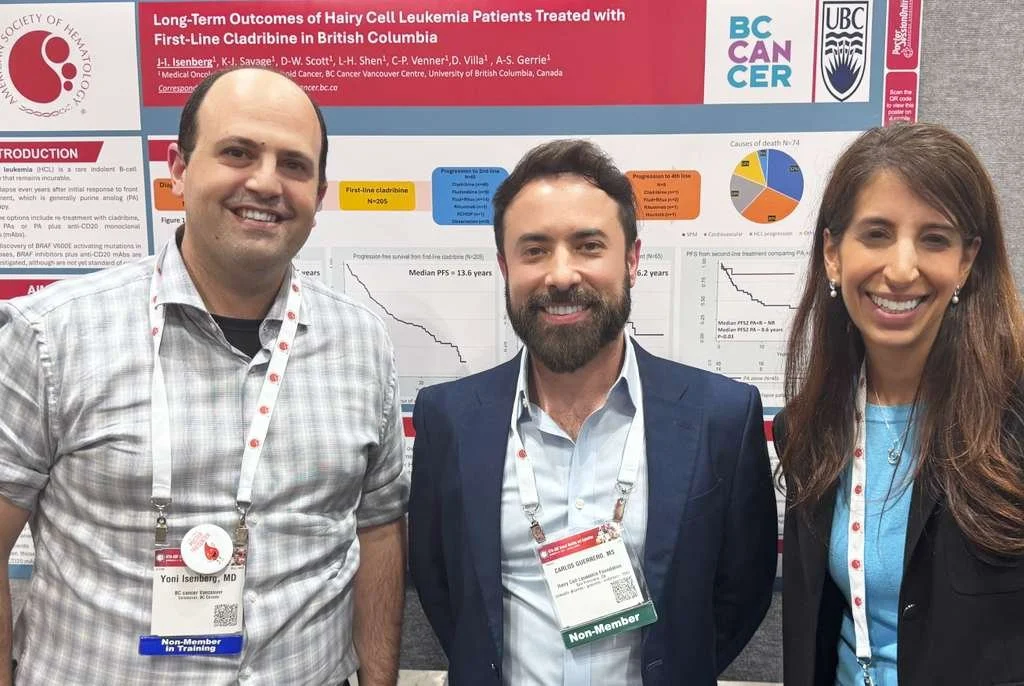
Yoni Isenberg, MD (BC Cancer), Carlos Guerrero (HCLF), and Alina Gerrie, MD (BC Cancer) at the 2025 ASH conference
In our third post from the ASH 2025: HCL Takeaways series, we highlight research by Dr. Yoni Isenberg and colleagues at BC Cancer and the University of British Columbia, examining long-term outcomes of patients with Hairy Cell Leukemia treated with first-line cladribine.
This study reflects decades of clinical experience from a leading cancer center and provides valuable real-world insights into how patients with HCL do over time.
What makes this research especially meaningful is that it follows patients for more than 20 years, helping answer one of the most important questions patients often ask: “How long do treatment benefits last?”
Why this study matters
For decades, cladribine has been a cornerstone treatment for HCL. Many patients experience deep and long-lasting remissions after just one course of therapy.
At the same time, HCL is a chronic condition. While treatment can be highly effective, some patients may see their disease return years later.
Understanding what happens over the long term is important. It helps patients, caregivers, and healthcare providers make informed decisions about treatment and follow-up care.
This study offers one of the most comprehensive real-world perspectives to date, tracking patient outcomes in British Columbia over more than 30 years.
How was the study conducted?
Researchers analyzed data from 279 patients diagnosed with HCL or HCL variant between 1990 and 2023, focusing on 205 patients with classic HCL who received cladribine as their first treatment. The median age at diagnosis was 56 years.
Patients were followed over time, in some cases for more than three decades, to better understand:
How long patients lived after treatment
How long does remission last before the disease returns
What treatments were used if the disease came back
What factors influenced long-term outcomes
This type of long-term, real-world data is especially valuable because it reflects what patients experience outside of clinical trials.
Key takeaways from the study
1. Patients lived many years after treatment
The study found that patients treated with cladribine had a median overall survival of 26.6 years.
This describes the overall survival of a group of patients, based on long-term, real-world data.
For patients, this is a powerful message: First-line treatment can lead to long and meaningful survival.
2. Remissions can last a long time, but follow-up remains important
The study also looked at how long patients stayed in remission. It found a median progression-free survival of 13.6 years.
This means that, on average, it took more than 13 years for half of the patients to relapse or require additional treatment.
While this is very encouraging, it also highlights an important reality: HCL can come back, even after many years of remission.
This is why:
Long-term follow-up is essential
Ongoing monitoring helps detect changes early
Continued research is advancing new therapies to improve outcomes even further
For patients, this reinforces that even after a long remission, staying connected to care is an important part of the journey.
3. Combination therapy may improve outcomes after relapse
For patients whose disease returned, researchers compared different second-line treatment approaches.
They found that patients who received:
A purine analog (such as cladribine ) combined with an anti-CD20 antibody (like rituximab) had longer remissions after relapse compared to those treated with chemotherapy alone.
More specifically:
Chemotherapy alone led to a median remission of 8.6 years
Combination therapy showed even longer-lasting responses, with the median not yet reached during the study
These findings suggest that combining treatments may provide more durable disease control if HCL returns, and help guide decisions about future therapy options.
4. Living longer brings a greater focus on overall health
One of the most important insights from this study is that many patients are living long enough for overall health and long-term wellness to become a key part of care.
Over time, some patients developed other health conditions, including new cancers or cardiovascular disease.
This reflects meaningful progress: Patients with HCL are living longer, and survivorship care matters.
This highlights the importance of:
Routine health screenings
Preventive care
Open conversations with your healthcare team
As treatments continue to improve, the focus is expanding beyond treating HCL to supporting long, healthy, and fulfilling lives after treatment.
What this means for patients
Reassurance: First-line treatment with cladribine continues to deliver strong, long-term results
Perspective: HCL may return over time, making follow-up care important
Progress: Combination therapies and newer approaches are improving outcomes for patients who relapse
Most importantly, this research reflects how far the HCL community has come.
Today, many patients can expect:
Long periods without active disease
Multiple effective treatment options, if needed
A growing focus on quality of life and survivorship
Looking ahead
Studies like this help build the foundation for the future of HCL care. By understanding long-term outcomes, researchers and clinicians can continue improving how the disease is treated at every stage.
With ongoing advances in targeted therapies and continued research, the future of HCL treatment is moving toward more personalized, effective, and patient-centered care.
Read more
Don’t miss the earlier posts in our ASH 2025: HCL Takeaways series:
Long-term results of cladribine with immediate rituximab and what they tell us about durable remissions
New genetic discoveries (MAP2K1 and MAP2K2) and what they may mean for personalized treatment approaches